
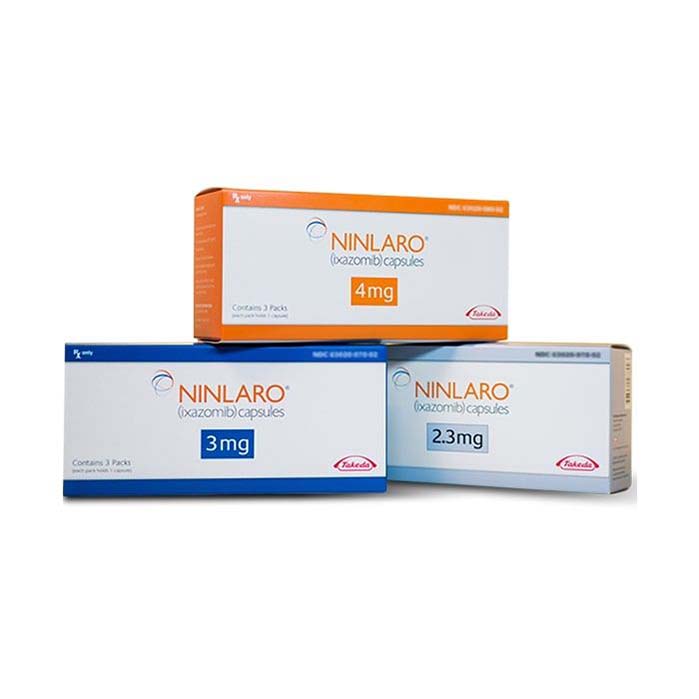
Introduction
Ninlaro, also known by its generic name Ixazomib, is a medication that has become a beacon of hope for individuals facing the relentless challenges of Multiple Myeloma (MM), a complex and incurable cancer of the plasma cells in the bone marrow. This description provides an in-depth exploration of the history, mechanism of action, therapeutic uses, administration, side effects, and ongoing research related to Ninlaro.
I. History of Ninlaro
The development of Ninlaro represents a significant milestone in the treatment of Multiple Myeloma. It received its first FDA approval in November 2015, marking a critical advancement in the quest to provide effective treatment options for MM patients. Ninlaro was developed by Takeda Pharmaceuticals.
II. Mechanism of Action
Ninlaro belongs to a class of medications known as proteasome inhibitors. Its mechanism of action involves selectively inhibiting the proteasome, a cellular complex responsible for the degradation of proteins in cells. By disrupting this process, Ninlaro interferes with the growth and survival of cancer cells, particularly the malignant plasma cells characteristic of Multiple Myeloma.
III. Therapeutic Uses
- Multiple Myeloma Treatment: Ninlaro is primarily indicated for the treatment of Multiple Myeloma in combination with other medications. It is often prescribed for patients who have received at least one prior therapy for MM.
- Maintenance Therapy: In some cases, Ninlaro may also be used as maintenance therapy to help delay disease progression after an initial response to treatment.
IV. Administration and Dosage
Ninlaro is available in the form of oral capsules, making it a convenient option for patients. The dosage and administration schedule are determined by the treating healthcare provider and typically involve a specific regimen, including other MM medications. Patients should carefully follow their provider’s instructions and take Ninlaro as prescribed.
V. Side Effects
As with any medication, Ninlaro can cause side effects, which may vary among individuals. Common side effects may include:
- Nausea
- Diarrhea
- Fatigue
- Vomiting
- Thrombocytopenia (low blood platelet count)
- Peripheral neuropathy (nerve damage in the extremities)
It is essential for patients to promptly report any unusual or severe side effects to their healthcare provider. Close monitoring of blood counts and nerve function is often part of the treatment plan.
VI. Ongoing Research and Future Directions
Ninlaro has significantly improved the treatment landscape for Multiple Myeloma, particularly for patients who have already undergone prior therapies. Ongoing research endeavors aim to further enhance its effectiveness and explore its use in other settings. Key areas of research include:
- Combination Therapies: Investigating the synergistic effects of Ninlaro when combined with other MM medications to improve response rates and long-term outcomes.
- Early Intervention: Exploring the use of Ninlaro in the early stages of Multiple Myeloma and as part of induction therapy to increase the depth of response before stem cell transplantation.
- Resistance Mechanisms: Studying the mechanisms underlying resistance to Ninlaro and developing strategies to overcome or prevent it.
- Patient Stratification: Identifying biomarkers or patient characteristics that can predict which individuals are most likely to benefit from Ninlaro therapy.
VII. Conclusion
Ninlaro, or Ixazomib, represents a crucial advancement in the treatment of Multiple Myeloma, offering a targeted approach to combat this complex and challenging cancer. Its oral administration and manageable side effect profile have improved the quality of life for many MM patients while extending their survival. As research continues to explore novel combinations, early intervention strategies, and personalized approaches, Ninlaro remains a pillar of hope for those living with Multiple Myeloma, offering the promise of a brighter future in the battle against this formidable disease.


Evelyn Osei –
Living with multiple myeloma isn’t easy, but Ninlaro has helped me feel much more hopeful. My overall health has remained stable, and I have enough energy to stay active and enjoy time with family and friends. My doctor has been very satisfied with my response to treatment, and I’m thankful for the progress I’ve made. I would absolutely give this medication five stars.
Lorenzo Bianchi –
I’ve been taking Ninlaro for several months, and I’m very pleased with how things have gone. The convenience of taking an oral medication has made treatment much less stressful, and my follow-up appointments continue to show encouraging results. I feel more confident managing my condition and maintaining a positive outlook.
Aisha Rahman –
Ninlaro has exceeded my expectations as part of my treatment for multiple myeloma. My healthcare team has monitored me closely, and the results have been consistently positive. I feel more energetic, my recovery between appointments has improved, and I can spend more quality time with my loved ones. I’m grateful to have access to this medication.
Sebastian Hoffmann –
After beginning Ninlaro, my treatment has become much easier to manage. My regular checkups have been encouraging, and I appreciate that my condition has remained stable. I feel more optimistic about the future and have been able to continue many of the hobbies I enjoy. This medication has made a meaningful difference in my quality of life.
Isabella Ferreira –
Ninlaro has been a valuable addition to my multiple myeloma treatment plan. Since starting it, my doctor has been pleased with my progress, and I’ve been feeling stronger with each passing month. I have more energy than I expected, and I’m able to enjoy everyday activities with my family again. Having an effective oral medication has also made my treatment routine much more convenient.