
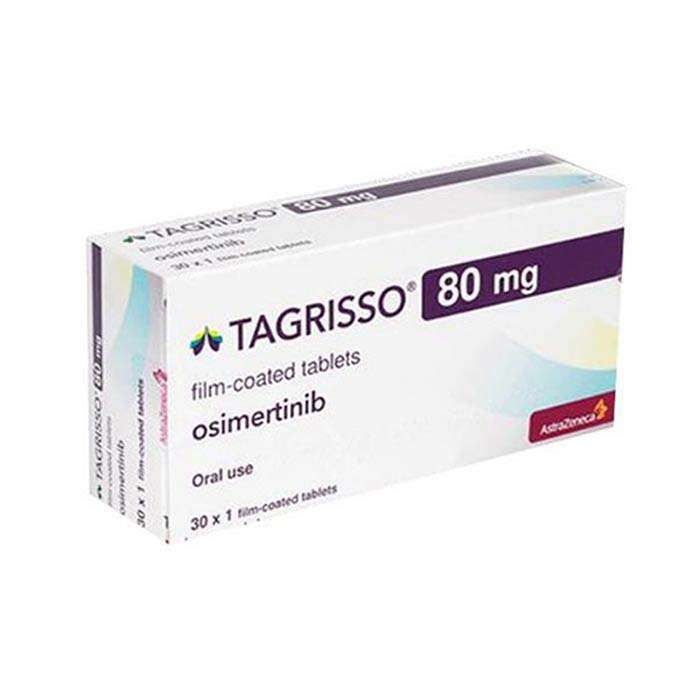
Lung cancer remains a global health challenge, with non-small cell lung cancer (NSCLC) being the most common and deadly form. While traditional treatments like chemotherapy and radiation therapy have been staples in cancer care, recent advancements in targeted therapies have ushered in a new era of hope for patients with specific genetic mutations. Tagrisso (Osimertinib) stands at the forefront of this revolution, offering a transformative treatment approach for NSCLC. In this description, we’ll explore the history, mechanism of action, clinical applications, and the remarkable impact of Tagrisso on the lives of patients battling this aggressive disease.
Introduction to Tagrisso
Tagrisso, also known by its generic name Osimertinib, is a kinase inhibitor developed by AstraZeneca. It received approval from the United States Food and Drug Administration (FDA) in November 2015, marking a significant milestone in the treatment of NSCLC. Tagrisso has been a game-changer, specifically targeting EGFR (epidermal growth factor receptor) mutations, which are prevalent in a subset of NSCLC patients.
Understanding NSCLC and EGFR Mutations
Non-small cell lung cancer is a complex and diverse disease, but EGFR mutations play a critical role in some cases. These mutations involve alterations in the EGFR gene, leading to the uncontrolled growth and division of cancer cells. EGFR mutations are more common in certain demographics, such as Asian populations, and are often associated with adenocarcinoma histology.
Mechanism of Action
Tagrisso’s mechanism of action is intricately linked to its ability to target EGFR mutations. Specifically, it is highly effective against the most common EGFR mutation, known as the T790M mutation, which often develops after treatment with earlier EGFR inhibitors.
Tagrisso works by binding to the mutated EGFR receptor, inhibiting its signaling pathways. This targeted approach disrupts the signals that drive the growth and survival of cancer cells while sparing healthy cells. By blocking the effects of the T790M mutation, Tagrisso effectively hinders the progression of NSCLC.
Clinical Applications
Tagrisso has revolutionized the treatment landscape for NSCLC patients with EGFR mutations, particularly the T790M mutation. Its clinical applications can be summarized as follows:
- EGFR-Mutated NSCLC: Tagrisso is primarily used for the treatment of advanced NSCLC in patients with EGFR mutations, including those who have developed resistance to other EGFR inhibitors due to the T790M mutation.
- First-Line Therapy: In some cases, Tagrisso may also be considered as a first-line therapy, particularly for patients with EGFR exon 19 deletions or L858R mutations.
Clinical Trials and Efficacy
The approval of Tagrisso was based on compelling clinical trial data. Notable among these trials is the AURA3 study, which investigated the efficacy of Tagrisso in NSCLC patients who had developed resistance to previous EGFR inhibitors due to the T790M mutation. The trial demonstrated that Tagrisso significantly improved progression-free survival compared to chemotherapy.
The impressive clinical results of Tagrisso have solidified its role as a game-changing therapy for NSCLC patients with EGFR mutations, offering new hope and extended survival.
Safety Profile
While Tagrisso has shown remarkable efficacy, it is essential to consider its safety profile. Common side effects may include diarrhea, rash, nausea, and fatigue. Some patients may experience more severe side effects, which require close monitoring by healthcare providers.
Despite potential side effects, Tagrisso’s ability to specifically target EGFR mutations while sparing healthy cells often outweighs the risks for patients with EGFR-mutated NSCLC. The drug’s targeted mechanism of action and its potential to extend progression-free survival make it a valuable treatment option.
Impact on Patients’ Lives
The introduction of Tagrisso has transformed the lives of NSCLC patients with EGFR mutations. Prior to its approval, treatment options for this subset of patients were limited, and the prognosis was often dire. Tagrisso has provided a new lease on life, offering a chance for extended survival, improved quality of life, and hope for the future.
For patients and their families, Tagrisso represents a lifeline in the face of a challenging diagnosis. It offers the possibility of more time together, moments of joy, and the opportunity to pursue cherished dreams. The drug’s targeted approach and ability to control the disease’s progression inspire patients to confront NSCLC with newfound strength and resilience.
Conclusion
Tagrisso (Osimertinib) is a groundbreaking medication that has revolutionized the treatment of NSCLC in patients with EGFR mutations. Its targeted mechanism of action, supported by robust clinical trial data, has provided a new level of hope for individuals facing this aggressive form of lung cancer. By inhibiting EGFR mutations, particularly the T790M mutation, Tagrisso offers new possibilities for extended survival and improved quality of life.
As research in the field of oncology continues to advance, the role of Tagrisso may evolve, potentially benefiting an even broader spectrum of patients. It serves as a testament to the progress of medical science and underscores the importance of ongoing innovation in the fight against NSCLC. For patients with EGFR-mutated NSCLC, Tagrisso represents a beacon of hope, offering a chance for extended survival and a brighter future in the face of a formidable adversary.





Noura Ben Salem –
Tagrisso has been one of the best decisions my oncologist and I have made. My condition has remained well managed, and I’ve been able to spend more quality time with my family while continuing treatment. Every positive update gives me more confidence about the future. I’m incredibly thankful for this medication and would gladly give it five stars.
Milan Horvat –
Since beginning Tagrisso, I’ve experienced steady progress and continued encouragement from my healthcare team. The treatment has fit well into my daily routine, and I feel optimistic every time I attend a follow-up appointment. I’m thankful for the advances in targeted therapy that have made this medication available.
Camila Ferreira –
Tagrisso has exceeded all of my expectations. My oncologist has been pleased with my response to treatment, and my scans have remained encouraging. I appreciate having a medication specifically designed for my type of lung cancer, and it has allowed me to focus on living my life instead of constantly worrying about my diagnosis.
Kenji Watanabe –
Starting Tagrisso gave me renewed hope. My medical team has been carefully monitoring my progress, and every appointment has brought positive news. I feel healthier, have more energy, and can enjoy everyday life with much greater confidence. This medication has become an essential part of my treatment.
Vivienne Laurent –
Tagrisso has made an incredible difference in my treatment journey. After learning that my lung cancer had an EGFR mutation, my oncologist recommended this medication. My follow-up scans have been very encouraging, and I continue to feel stronger with each passing month. I’m grateful to have access to such an effective targeted therapy.