
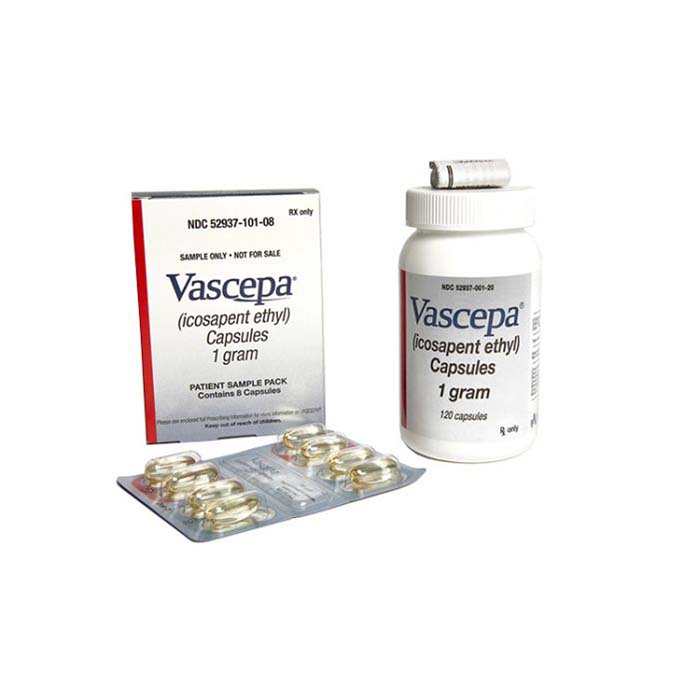
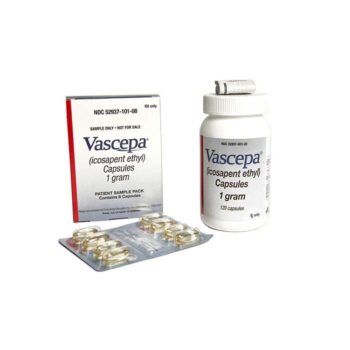
Vascepa (icosapent ethyl) is a prescription medication used to reduce the risk of cardiovascular events, including heart attack, stroke, and death, in adults with established cardiovascular disease or with elevated triglyceride levels. Vascepa is a capsule that is taken orally with food.
Uses:
Vascepa is used to reduce the risk of cardiovascular events in adults with established cardiovascular disease or with elevated triglyceride levels.
Storage Conditions:
Vascepa should be stored in a cool and dry place, at a temperature of 20°C to 25°C (68°F to 77°F).
Mechanism of Action:
Vascepa is a type of omega-3 fatty acid that contains only eicosapentaenoic acid (EPA) and is free from docosahexaenoic acid (DHA). EPA has been shown to reduce inflammation and plaque buildup in the arteries, which can reduce the risk of cardiovascular events.
HOW TO USE:
Vascepa should be taken orally with food. The recommended dose is 4 grams per day, either as a single 4-gram capsule or as two 2-gram capsules twice daily.
Important Safety Information:
• Vascepa may cause serious allergic reactions, such as anaphylaxis, which are potentially life-threatening. Patients should seek emergency medical attention immediately if they experience symptoms of an allergic reaction, such as difficulty breathing, swelling of the face, lips, tongue, or throat, or severe itching or skin rash.
• The medication may interact with other medications, such as anticoagulants, and increase the risk of bleeding. Patients should inform their healthcare provider of all medications they are taking, including supplements and herbal remedies.
• Vascepa may increase the risk of bleeding, and patients who have a bleeding disorder or who take anticoagulant medications should use the medication with caution.
• The medication may also increase the risk of pancreatitis, and patients should discontinue the medication if they develop symptoms of pancreatitis, such as severe abdominal pain.
Indications:
• Vascepa is indicated as an adjunct to diet to reduce the risk of cardiovascular events in adults with elevated triglyceride levels of 150 mg/dL or higher and established cardiovascular disease, or diabetes mellitus and two or more additional risk factors for cardiovascular disease.
Precautions:
• Patients with a history of hypersensitivity to icosapent ethyl or any of its components should not take Vascepa.
• The medication should be used with caution in patients with hepatic impairment or severe renal impairment.
Interactions:
• Vascepa may interact with other medications, such as anticoagulants, and increase the risk of bleeding.
• Patients should inform their healthcare provider of all medications they are taking, including supplements and herbal remedies, before starting treatment with Vascepa.
Contraindications:
• Vascepa is contraindicated in patients with a hypersensitivity to icosapent ethyl or any of its components.
Overdose:
There is no specific antidote for Vascepa. In case of an overdose, patients should seek emergency medical attention immediately.
Side Effects:
The most common side effects of Vascepa include joint pain, muscle pain, and flu-like symptoms. Other possible side effects may include gastrointestinal symptoms, such as diarrhea, hyperglycemia, and atrial fibrillation. Patients should notify their healthcare provider if they experience any unusual symptoms while taking Vascepa.
In conclusion, Vascepa is a medication used to reduce the risk of cardiovascular events in adults with established cardiovascular disease or with elevated triglyceride levels. It contains only eicosapentaenoic acid (EPA) and is free from docosahexaenoic acid (DHA), which has been shown to reduce inflammation and plaque buildup in the arteries. Patients should take the medication orally with food, and the recommended dose is 4 grams per day. Vascepa may cause serious allergic reactions and increase the risk of bleeding and pancreatitis. The medication should be used with caution in patients with hepatic impairment or severe renal impairment and is contraindicated in patients with a hypersensitivity to icosapent ethyl or any of its components. Patients should inform their healthcare provider of all medications they are taking, including supplements and herbal remedies. Vascepa should be stored in a cool and dry place, at a temperature of 20°C to 25°C (68°F to 77°F).


Farah El Amrani –
Taking Vascepa has been one of the best decisions for my cardiovascular health. My triglyceride levels are well controlled, my doctor is pleased with my ongoing progress, and I feel confident about the future. It’s simple to include in my daily routine, and I’m thankful for the positive impact it has had on my overall health.
Tomasz Zieliński –
Vascepa has exceeded my expectations. My routine checkups have shown positive improvements, and my healthcare provider has been very happy with my results. Combined with healthy eating and regular physical activity, this medication has helped me stay focused on improving my long-term heart health. I’m very grateful.
Bianca Romano –
Since starting Vascepa, I’ve seen steady improvements in my cholesterol and triglyceride numbers. My cardiologist has been impressed with my progress, and I feel motivated to continue maintaining a healthy lifestyle. Knowing I’m doing more to reduce my cardiovascular risk gives me tremendous peace of mind.
Lars Henriksen –
Vascepa has been an important part of managing my heart health. My follow-up lab results have been consistently encouraging, and my triglyceride levels have improved noticeably. The medication has been easy to take, and I appreciate the reassurance it provides. I’m extremely satisfied with my experience.
Francesca Gallo –
My doctor prescribed Vascepa after my triglyceride levels remained elevated despite improving my diet and exercise habits. After several months, my blood work showed significant improvement, and my doctor was very pleased with the results. I feel more confident knowing I’m taking positive steps to protect my cardiovascular health.