
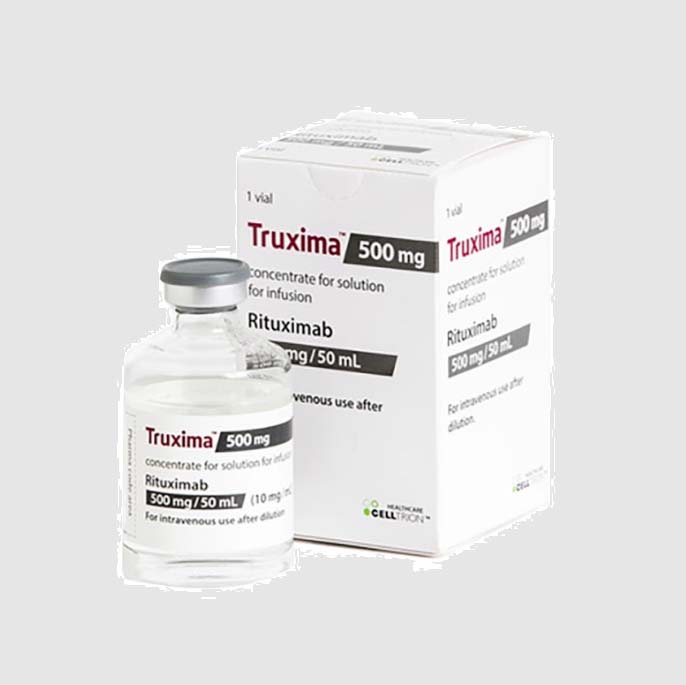
Truxima is a pharmaceutical medication that contains the active ingredient rituximab. It belongs to a class of medications known as monoclonal antibodies and is used for various medical conditions, primarily in the treatment of certain autoimmune diseases and types of cancer. Rituximab works by targeting and inhibiting the activity of specific cells in the immune system, which can help manage various conditions.
Here is a detailed description of Truxima:
Active Ingredient:
- Rituximab: Rituximab is a monoclonal antibody that targets and binds to a protein called CD20 on the surface of certain immune cells, particularly B lymphocytes (B cells). By binding to CD20, rituximab helps to eliminate or reduce the activity of B cells, which are involved in various autoimmune diseases and cancers.
Indications:
Truxima is indicated for several medical conditions, including:
- Non-Hodgkin Lymphoma (NHL): Truxima is used in combination with chemotherapy to treat various forms of NHL, including follicular lymphoma, diffuse large B-cell lymphoma, and chronic lymphocytic leukemia (CLL).
- Rheumatoid Arthritis (RA): Truxima is used in combination with methotrexate to manage moderate to severe rheumatoid arthritis in adult patients who have not responded well to other treatments.
- Granulomatosis with Polyangiitis (GPA) and Microscopic Polyangiitis (MPA): Truxima is used in combination with glucocorticoids to treat GPA and MPA, two rare autoimmune diseases that cause inflammation of small blood vessels.
Usage:
The dosing and administration of Truxima are determined by a healthcare provider and depend on the specific condition being treated. It is administered as an intravenous (IV) infusion, and the frequency and duration of treatment can vary.
Mechanism of Action:
Rituximab, the active ingredient in Truxima, works by targeting and binding to CD20 on B cells. This binding leads to the destruction or depletion of these B cells, which play a role in various autoimmune diseases and cancers. By reducing the activity of B cells, rituximab helps control the underlying disease processes.
Benefits:
The primary benefit of Truxima is its ability to target and inhibit B cells, which are involved in autoimmune diseases and certain types of cancer. By doing so, it can help manage these conditions, reduce symptoms, and improve the overall quality of life for patients.
Precautions:
Before starting Truxima, patients should undergo a thorough evaluation by a healthcare provider. It is important to inform the healthcare provider of any allergies, medical conditions, or other medications being taken, as these factors can affect the safety and efficacy of the medication.
Side Effects:
Common side effects of Truxima may include infusion reactions (fever, chills, rash, etc.), low blood cell counts, and an increased risk of infections. Patients may also experience mild to moderate reactions during the infusion, which can typically be managed by the healthcare provider. Serious side effects are possible but less common. Patients should promptly report any unusual or severe side effects to their healthcare provider.
In conclusion, Truxima (rituximab) is a medication used to treat various medical conditions, including certain autoimmune diseases and types of cancer. It works by targeting B cells in the immune system and is administered as an intravenous infusion. Patients should use it as directed by their healthcare provider and be aware of potential side effects and precautions associated with its use.





Emmeline Norwood –
Truxima has exceeded my expectations as part of my treatment plan. My physician thoroughly explained what to expect before each infusion, and the entire process was handled professionally. Since starting therapy, my condition has remained stable, my follow-up evaluations have been encouraging, and I feel much more optimistic about my long-term health. Any mild side effects were temporary and well managed by my healthcare team. I’m extremely grateful to have access to a treatment that has made such a meaningful difference in my life.
Beckett Langford –
My doctor prescribed Truxima to help manage granulomatosis with polyangiitis after other treatments weren’t providing enough control. Since beginning therapy, my symptoms have improved considerably, and my routine follow-up appointments have shown encouraging progress. I have more energy, less inflammation, and feel much better able to enjoy everyday life. The infusion process was straightforward, and my medical team ensured I was comfortable every step of the way. I couldn’t be more pleased with the outcome.
Lucinda Fairmont –
I received Truxima as part of my treatment for chronic lymphocytic leukemia, and the experience has been very positive. My blood work has steadily improved, and my specialist has been encouraged by my response to therapy. The infusion center staff were incredibly supportive and carefully monitored me throughout each visit. Although I was nervous before starting treatment, everything went much smoother than I expected. I’m thankful for the excellent care I received and for the benefits Truxima has provided.
Harrison Blythe –
After being diagnosed with rheumatoid arthritis that wasn’t responding well to previous medications, my rheumatologist recommended Truxima. Within a few months, I noticed a significant reduction in joint pain, swelling, and morning stiffness. I can now enjoy daily walks and household activities without the constant discomfort I used to experience. The infusion appointments were well organized, and my healthcare team made the process comfortable. I’m very happy with how well Truxima has worked for me.
Corinne Ashbury –
I began treatment with Truxima for follicular lymphoma after discussing my options with my oncologist. Throughout the treatment process, my healthcare team monitored me closely, and I always felt well cared for. My follow-up scans have shown encouraging results, and my doctor has been very pleased with my response to therapy. While I experienced some mild fatigue after the infusions, it was manageable and improved within a couple of days. Overall, Truxima has been an important part of my treatment plan, and I’m grateful for the positive progress I’ve made.